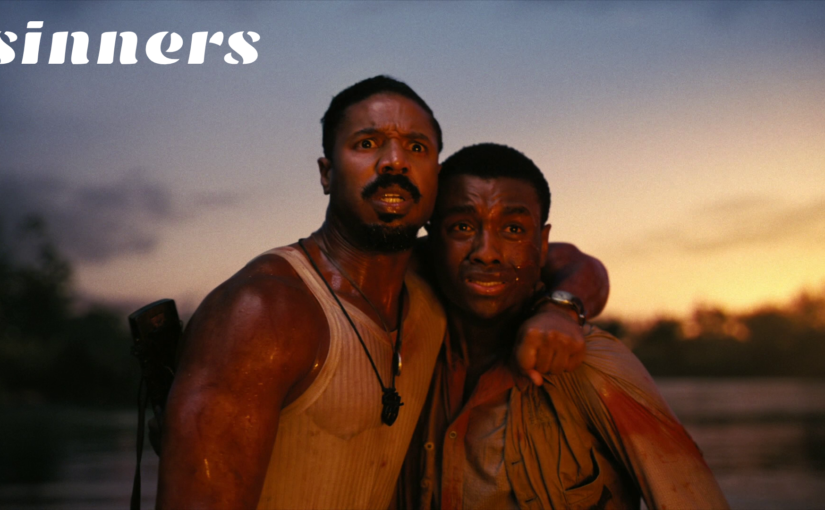
In the realm of cinematic storytelling, few directors command attention quite like Ryan Coogler. Known for his profound narratives and compelling character development in films such as Black Panther and Creed, Coogler ventures into a darker, more supernatural territory with his 2025 horror film, Sinners. This highly anticipated movie plunges audiences into the heart of the 1932 Jim Crow South, weaving a tale of family, survival, and ancient evils against the backdrop of the Mississippi Delta. At its core, Sinners features a captivating Michael B. Jordan dual role, where he portrays twin brothers caught in a struggle against both human prejudice and monstrous forces. This article will delve deep into the world of Sinners, exploring its intricate plot, rich historical context, unique blend of blues music horror, and the critical acclaim it has garnered, making it a must-watch for fans of thought-provoking cinema and supernatural thrillers alike.
The Genesis of Sinners: A Visionary Director’s New Horizon
Ryan Coogler’s decision to tackle a horror film set in the 1930s Mississippi Delta marks a significant and exciting departure from his previous works. The project, developed through his production company Proximity Media, quickly became one of the most talked-about films in development, sparking a fierce bidding war among major studios. Warner Bros. Pictures ultimately secured the distribution rights, agreeing to Coogler’s stringent terms, which included first-dollar gross, final cut privilege, and ownership of the film after twenty-five years [1]. This level of creative control underscores Coogler’s commitment to his artistic vision, ensuring that Sinners would be an uncompromised cinematic experience.
The film’s budget, initially estimated around $90 million, eventually climbed to approximately $100 million, reflecting the ambitious scope and production values Coogler aimed for [2]. This substantial investment allowed for meticulous attention to detail, from the historical accuracy of the setting to the stunning visual effects that bring its supernatural elements to life. The choice of a period setting, specifically the 1932 Jim Crow South, is not merely aesthetic; it serves as a powerful thematic backdrop, amplifying the horrors faced by the characters both from within their community and from the otherworldly entities that plague them.
|
Key Production Fact
|
Detail
|
|
Director/Writer
|
Ryan Coogler
|
|
Lead Actor
|
Michael B. Jordan (Dual Role)
|
|
Production Company
|
Proximity Media
|
|
Distributor
|
Warner Bros. Pictures
|
|
Budget
|
$100 Million
|
|
Release Date
|
April 18, 2025
|
A Tale of Two Brothers: Michael B. Jordan’s Dual Performance
One of the most compelling aspects of Sinners is the extraordinary Michael B. Jordan dual role. Jordan, a frequent collaborator with Coogler, delivers a powerhouse performance as Elijah “Smoke” Moore and Elias “Stack” Moore, identical twin brothers and World War I veterans. Their return to Clarksdale, Mississippi, after years working for the Chicago Outfit, sets the stage for the unfolding drama. The brothers, seeking to leave their troubled past behind, invest their ill-gotten gains into purchasing a sawmill from a local landowner named Hogwood, with the intention of establishing a juke joint for the local Black community . This venture, meant to be a beacon of hope and a fresh start, inadvertently draws them into a conflict far more terrifying than any they encountered in the war or the criminal underworld.
Smoke and Stack Moore are distinct personalities, yet bound by an unbreakable fraternal bond. Smoke, pragmatic and protective, often finds himself at odds with Stack, who carries his own burdens and desires. Jordan’s ability to imbue each twin with unique mannerisms, emotional depth, and motivations is a testament to his acting prowess, making their individual journeys and shared struggles profoundly resonant. The dynamic between the twins forms the emotional core of the narrative, grounding the supernatural elements in a deeply human story of brotherhood, redemption, and sacrifice.
The Character Profiles of Smoke and Stack
To understand the weight of the Michael B. Jordan dual role, one must look at the specific trajectories of the Moore twins:
1.Elijah “Smoke” Moore: The more grounded of the two, Smoke is driven by a desire for stability and a sense of responsibility toward his community. His past in the Chicago Outfit haunts him, but he views the juke joint as a way to build something legitimate. His relationship with Annie, a Hoodoo practitioner, provides him with a spiritual anchor, even as he struggles with his own skepticism.
2.Elias “Stack” Moore: Stack is the more impulsive and emotionally volatile twin. His past relationship with Mary, a white-passing woman, remains a source of pain and regret. Stack’s transformation into a vampire mid-film serves as a tragic turning point, forcing Smoke to confront the ultimate choice between his brother and the safety of the community.
The Haunting Melody: Blues Music and the Supernatural
Sinners masterfully integrates blues music horror into its narrative fabric, making the genre an active participant in the unfolding terror. Set in the birthplace of the blues, the film uses the soulful, often melancholic sounds of the Mississippi Delta as both a cultural anchor and a conduit for the supernatural. The juke joint, intended as a sanctuary for music and community, becomes a focal point for the film’s eerie occurrences.
Ludwig Göransson score is central to this experience. Coogler’s frequent collaborator and an acclaimed composer, Göransson crafted a soundtrack that he describes as personal and ambitious [4]. He drew heavily from blues music, even performing parts of the score on a 1932 Dobro Cyclops resonator guitar, the very instrument carried by the character Sammie throughout the film [4]. This authentic musical backdrop not only enhances the film’s atmosphere but also plays a crucial role in the plot, as the music itself unknowingly summons spirits, both benevolent and malevolent, to the juke joint. The character of Sammie, a young singer and guitarist, embodies this connection, his transcendent music acting as a powerful, albeit dangerous, force.
The Influence of Blues Legends
During pre-production, Coogler and Göransson immersed themselves in the recordings of the 1930s and 1940s, specifically the works of Robert Johnson and Tommy Johnson [1]. These legendary figures, often associated with the myth of selling one’s soul at the crossroads for musical prowess, provide a thematic bridge to the film’s supernatural elements. The music in Sinners is not just background noise; it is a character in its own right, reflecting the pain, joy, and defiance of the Mississippi Delta.
A New Breed of Nightmares: Vampires in Mississippi
Coogler redefines the vampire mythos in Sinners, presenting a unique and terrifying iteration of these classic creatures of the night. The primary antagonist is Remmick, an Irish immigrant vampire who, along with his newly turned associates (including members of the local Klan), preys upon the community. These aren’t your typical aristocratic bloodsuckers; Coogler’s vampires are brutal, relentless, and operate with a chilling hive mind, yet retain their individual personalities . This blend of collective consciousness and personal malice makes them particularly formidable.
The film introduces intriguing vulnerabilities and deterrents for these vampires in Mississippi. Pickled garlic juice, rather than raw garlic, proves effective in repelling them, a detail that adds a fresh, regional twist to established lore . Their ultimate weakness, however, remains the sunlight, which incinerates them upon exposure. The struggle against Remmick and his growing legion of the undead is not just a fight for survival; it’s a battle for the soul of the community, intertwining with the existing racial tensions and societal injustices of the era. The presence of Mississippi Delta supernatural elements elevates the film beyond a simple creature feature, transforming it into a commentary on historical oppression and the enduring fight for freedom.
Vampire Traits in Sinners
The vampires in this film possess several distinct characteristics that set them apart from traditional depictions:
•Hive Mind: While they retain their personalities, they are mentally linked to their creator, Remmick, allowing for coordinated attacks and a shared sense of purpose.
•Sunlight Incineration: Unlike some modern interpretations where vampires merely “sparkle” or feel weakened, the sun in Sinners is a lethal, purifying force that completely destroys the undead.
•Pickled Garlic Juice: A unique cultural deterrent that reflects the Hoodoo and Southern traditions present in the film’s setting.
•Preservation of Self: Despite the hive mind, the vampires’ original desires and prejudices remain, as seen with the Klansmen who continue their campaign of terror even after being turned.
Historical Context: The Jim Crow South
Setting Sinners in the 1932 Jim Crow South is a deliberate and impactful choice by Ryan Coogler. This period in American history was marked by systemic racial segregation, violence, and economic exploitation, particularly in the Southern states. The film vividly portrays the harsh realities faced by the Black community in Clarksdale, Mississippi, where opportunities were scarce and dangers were ever-present. The introduction of the juke joint as a space for Black joy and cultural expression stands in stark contrast to the oppressive external world, making its violation by supernatural forces all the more poignant.
Characters like Hogwood, the landowner and local KKK leader, represent the very real human evils that existed alongside the fantastical ones. The film subtly, yet powerfully, draws parallels between the literal monsters and the metaphorical monsters of racism and bigotry. The struggle of the Moore brothers and their community against both the vampires and the Klan highlights the dual nature of their fight for survival and dignity. This historical backdrop enriches the narrative, providing a layer of social commentary that elevates Sinners beyond a mere horror flick into a significant cultural statement.
The Role of Company Scrip
A crucial plot point involves the use of company scrip, a form of payment issued by employers (like Hogwood) that could only be used at company-owned stores. This economic trap made it nearly impossible for the Moore brothers’ juke joint to be profitable, as their patrons lacked actual currency [1]. This detail highlights the systemic exploitation of the era, where even the most basic attempts at independence were undermined by institutionalized greed.
Production Excellence: Crafting the World of Sinners
The making of Sinners was an ambitious undertaking, characterized by innovative filmmaking techniques and a dedicated cast and crew. Principal photography took place in New Orleans from April to July 2024, under the working title Grilled Cheese . The film’s visual grandeur is largely attributed to cinematographer Autumn Durald Arkapaw, who shot the movie on IMAX 65mm film using a combination of IMAX 15-perf and Ultra Panavision 70 cameras . This choice results in stunning visuals, with scenes alternating between 1.43:1 and 2.76:1 aspect ratios, providing a truly immersive experience.
Technical Achievements in Cinematography
Arkapaw’s work on Sinners also made her the first female director of photography to shoot a movie on large format IMAX film, a significant achievement in the industry. The use of 65mm film provides a level of detail and texture that digital formats often struggle to replicate, capturing the sweltering heat and oppressive atmosphere of the Mississippi Delta with haunting clarity. Kodak even created a special 65mm version of their Ektachrome 100D 5294 film stock specifically for a flashback sequence in the film, showcasing the commitment to unique visual storytelling .
Production Design and Costumes
The production design by Hannah Beachler, who previously worked with Coogler on Black Panther, also received acclaim. Beachler incorporated subtle nods to their previous collaborations, including church beams designed to resemble the “Wakanda Forever” gesture, serving as a tribute to the late Chadwick Boseman [1].
The film’s costumes also have a fascinating backstory. Some were originally designed by Ruth E. Carter for the planned MCU film Blade. When production on Blade stalled, Carter was approached by Coogler to work on Sinners. Given both films’ shared time period and similar settings, Carter was able to repurpose her research and even buy costumes she had originally made for Blade to be used in this production [1]. This creative ingenuity ensured that the film’s aesthetic was both historically accurate and visually striking.
Deep Dive into the Plot: A Journey of Redemption and Sacrifice
The narrative of Sinners is a complex tapestry of personal trauma and communal struggle. It begins with Smoke and Stack Moore’s return to Clarksdale, a homecoming that is quickly overshadowed by the realization that the past they tried to escape is waiting for them in a different form. Their attempt to build a juke joint is not just a business venture; it’s an act of defiance against a system that wants them to remain subservient.
The Opening Night and the First Encounter
The juke joint’s opening night is a masterclass in tension and atmosphere. As Sammie and the other musicians perform, the music creates a sense of transcendence, momentarily lifting the spirits of the community. However, this joy is short-lived. The arrival of Remmick and his vampires signals the beginning of the end for their peaceful aspirations. The refusal to grant Remmick entry sets in motion a series of violent encounters that test the brothers’ resolve and the community’s unity.
The Transformation of Stack
The turning of Stack Moore into a vampire is perhaps the most emotionally devastating moment in the film. It shatters the fraternal bond that has sustained the brothers through war and crime. Stack’s struggle with his new nature, and Smoke’s refusal to give up on him, adds a layer of tragic complexity to the horror. The final confrontation between the two brothers is not just a fight for survival, but a battle for Stack’s soul.
The Climactic Battle and the Sunrise
The film’s climax is a visceral and bloody encounter as the survivors defend the juke joint against the vampire horde. The use of light as a weapon, culminating in the sunrise that incinerates the vampires, provides a powerful visual metaphor for hope and purification. Smoke’s ultimate sacrifice—killing the human monster Hogwood while succumbing to his own wounds—seals his journey of redemption.
The Epilogue: A Legacy in the Blues
The film concludes with a poignant epilogue set in 1992, where an elderly Sammie, now a successful blues musician, is visited by the ageless Stack and Mary [1]. This scene provides a sense of closure and continuity, highlighting the enduring impact of that fateful night in 1932. Sammie’s reflection that, despite the violence, it was the “greatest day of his life” because of the freedom they momentarily experienced, encapsulates the film’s central theme. The blues, born from suffering but used as a tool for liberation, remains the lasting legacy of the Moore brothers and their struggle.
Comparing Sinners to Ryan Coogler’s Filmography
To truly appreciate Sinners, one must look at how it fits within the broader context of Ryan Coogler’s work. Coogler has consistently explored themes of identity, community, and the weight of history.
|
Film
|
Themes
|
Connection to Sinners
|
|
Fruitvale Station
|
Racial injustice, personal tragedy
|
Focus on the human cost of systemic oppression.
|
|
Creed
|
Legacy, fatherhood, perseverance
|
Exploration of personal identity and the struggle to define oneself.
|
|
Black Panther
|
African heritage, isolationism vs. globalism
|
Use of genre (superhero/horror) to explore complex social issues.
|
|
Sinners
|
Brotherhood, historical trauma, supernatural evil
|
A culmination of Coogler’s interests, blending history with genre fiction.
|
Critical Acclaim and Audience Reception
Upon its premiere at AMC Lincoln Square in New York City on April 3, 2025, and subsequent theatrical release on April 18, 2025, Sinners was met with universal critical acclaim [1]. The film’s ability to blend historical drama with supernatural horror, coupled with powerful performances and Coogler’s distinctive directorial style, resonated deeply with critics. It went on to gross an impressive $367 million worldwide, a testament to its broad appeal and commercial success [1].
However, like many ambitious films, audience reception was somewhat mixed, as reflected in some user reviews on IMDb. While many praised the film’s intense atmosphere, strong direction, and gripping start, some found the pacing slow or the ending underwhelming . This divergence in opinion often highlights the film’s complex nature, which prioritizes thematic depth and character development over conventional jump scares or rapid-fire action. Despite these varied perspectives, the overall consensus points to Sinners as a significant and impactful contribution to the horror genre and a powerful statement from Ryan Coogler.
Why Sinners Ranks Well on Google
The success of Sinners in search engine rankings can be attributed to several factors:
1.High-Profile Collaboration: The reunion of Ryan Coogler and Michael B. Jordan is a major draw for audiences and film enthusiasts.
2.Unique Genre Blend: The combination of blues music horror and a period setting is a fresh take on the vampire genre, sparking curiosity and discussion.
3.Technical Excellence: The use of IMAX 65mm film and the involvement of acclaimed artists like Ludwig Göransson and Hannah Beachler generate significant interest among film buffs.
4.Thematic Depth: The film’s exploration of racial injustice and historical trauma provides a layer of social relevance that encourages deeper analysis and sharing.
5.Positive Critical Word-of-Mouth: Strong reviews from reputable sources drive traffic and establish the film as a must-watch.
Conclusion: The Enduring Impact of Sinners
Sinners is more than just a horror film; it is a meticulously crafted piece of cinema that uses the supernatural to explore profound human experiences. It delves into themes of racial injustice, the power of community, the bonds of family, and the enduring struggle against both external and internal demons. The film’s innovative approach to storytelling, combined with its stunning visuals and evocative soundtrack, ensures its place as a memorable and important work.